Preserved Lemons: A Beginner's Guide to Salt-Curing and Using Them
October 30, 2026 - Lemon Recipes
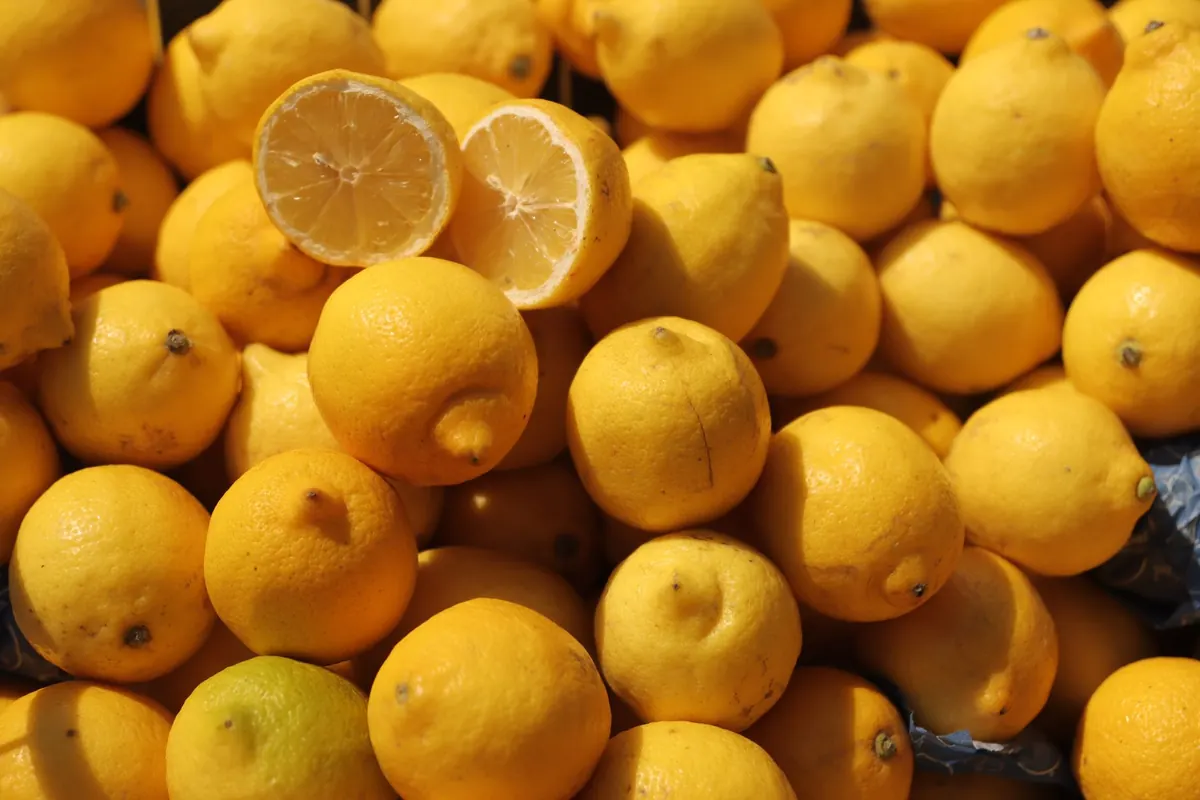
A Sfusato Amalfitano picked on a terraced slope above the Tyrrhenian Sea and an Interdonato from the Ionian coast of Sicily are both lemons, and both Italian, yet they behave like different fruits. One is long and pointed with a rind so thick the air around it smells of perfume; the other is smooth, mild and ready to eat in slices by early autumn. Between them sit dozens of local varieties, each shaped by a particular valley, a particular wind, a particular market.
Knowing which is which matters whether you are choosing a tree for a sheltered courtyard or deciding what to do with a crate of unusually fragrant fruit.
Citrus arrived in southern Italy by way of Arab and later Genoese traders, and Italian growers did what growers everywhere do: they kept the seedlings that survived their own conditions. A slope above Amalfi needed a lemon that could cling to a terrace and be carried down on a mule. The flat Ionian plain near Messina needed one that ripened early enough to reach northern markets first. Tuscany, which gets real frost, needed something tougher and less elegant.
The result is a set of varieties that are almost regional dialects of the same fruit. Many now carry IGP status (Indicazione Geografica Protetta), which ties the name to a defined growing area and a set of production rules. That label is a useful signal, but it is not the whole story — plenty of excellent lemons are grown outside the protected zones.
The name comes from fuso, a spindle, which describes the fruit exactly: elongated, gently curved, tapering to a pointed tip. It is grown on the Amalfi Coast, in the provinces of Salerno, on terraces known as macere built from dry stone and propped up with chestnut poles.
Cut one open and the rind is thick, spongy and loaded with essential oil — this is the lemon of limoncello, of granita, of the zest that perfumes a whole cake. The juice is plentiful but not punishingly sour, which is why the Amalfitano works as well eaten out of hand as it does squeezed over fish.
This is not an easy garden lemon. The tree is vigorous and thorny, needs protection from sea wind and salt spray, and is fussy about cold. It grows best where it never sees a hard frost and where drainage is sharp, which is exactly what a stone terrace on a steep slope gives it. Growers on the coast also manage a second, summer harvest by controlling irrigation and pruning to encourage a fresh bloom, so the fruit can be sold through the warm months when prices are higher.
A few miles across the peninsula, the Sorrento lemon is a rounder, less sharply pointed fruit with a thinner rind and a very high aromatic profile. It is more delicate than the Amalfitano — less suited to long travel, more suited to being eaten fresh, sliced into salads or used for sorbetto within a day or two of picking.
For home growers the two are often confused, and nurseries do not always help. If you want the Sorrento type specifically, look for "Sfusato Sorrentino" or the IGP designation, and accept that the rind is softer and thinner than the Amalfi version — that fragility is the price of the fragrance.
The Interdonato lemon belongs to the Ionian coast around Messina, and it solves a commercial problem neatly: it ripens first. Fruit starts coming off the trees in September and October, well before the main southern crop, which is why you will find it on Italian market stalls while other lemons are still green and hard.
The tree is upright and vigorous, and the fruit is oblong with rounded ends and a thin, pale yellow rind. The juice is notably mild — low in acid, almost sweet — so it is the rare lemon you can serve in slices with salt and oil. That thin skin is also its weakness: the fruit bruises, stores less well and travels badly, which is a fair explanation for why the Interdonato is beloved locally and less famous abroad.
If you have ever drunk a bottle of Italian lemon juice or eaten a lemon-flavoured pastry made industrially in Sicily, a Femminello almost certainly played a part. The group is grown all over the south, but the Siracusa strain is the reference point: very juicy, sharply acidic, with plenty of essential oil in the rind and an extraordinary habit of rifioritura — flowering several times a year.
That habit gives Sicilian growers three overlapping harvests, traditionally named for the season of the bloom rather than the fruit: the main winter crop, a spring crop and a summer crop. For a gardener this repeated flowering is genuinely attractive. It means a tree that produces intermittently for much of the year rather than in one frantic fortnight, and it means fresh lemons in July, which few other varieties will give you.
Before ordering a tree, answer these questions honestly. The answers will narrow the field faster than any catalogue description.
The most reliable lemon variety is the one that survives your coldest week without protection. If you garden in the far south, plant what the locals plant and you will not go far wrong. If you garden further north, buy a grafted tree on a cold-tolerant rootstock, keep it in a large pot, move it under cover from November, and water sparingly through the winter — more lemon trees die of wet, cold roots than of frost itself.
Buy from a nursery that names the variety and the rootstock, not just "lemon". Ask when the tree was grafted and whether it has fruited yet. Then give it sun, sharp drainage and a sheltered spot, and let the fruit tell you which part of Italy it really came from.
Photo: Efrem Efre / Pexels
A practical guide to salt-curing lemons at home: choosing fruit, packing the jar, keeping it clean, judging when...
A clear, practical guide to making limoncello at home from lemon zest, strong alcohol and syrup, with the specific...
Copyright © 2026 Limone Del Fiume. All Right Reserved.